Fake hacking pranks use a browser tool that fills the screen with realistic-looking code while you mash the keyboard — you look like a movie hacker, and nothing is actually hacked. No software, no downloads, no access to anyone's system. It is theatre: green text on black, a progress bar that means nothing, and an "ACCESS GRANTED" banner timed for maximum drama.
They work because almost nobody knows what real hacking looks like. What people think it looks like comes from films — walls of scrolling code, frantic typing, a countdown, a sudden red ALERT. That gap between reality and expectation is the entire joke, and it is why a fake hacking screen still gets a reaction in a room full of people who should know better.
How a Fake Hacking Screen Actually Works
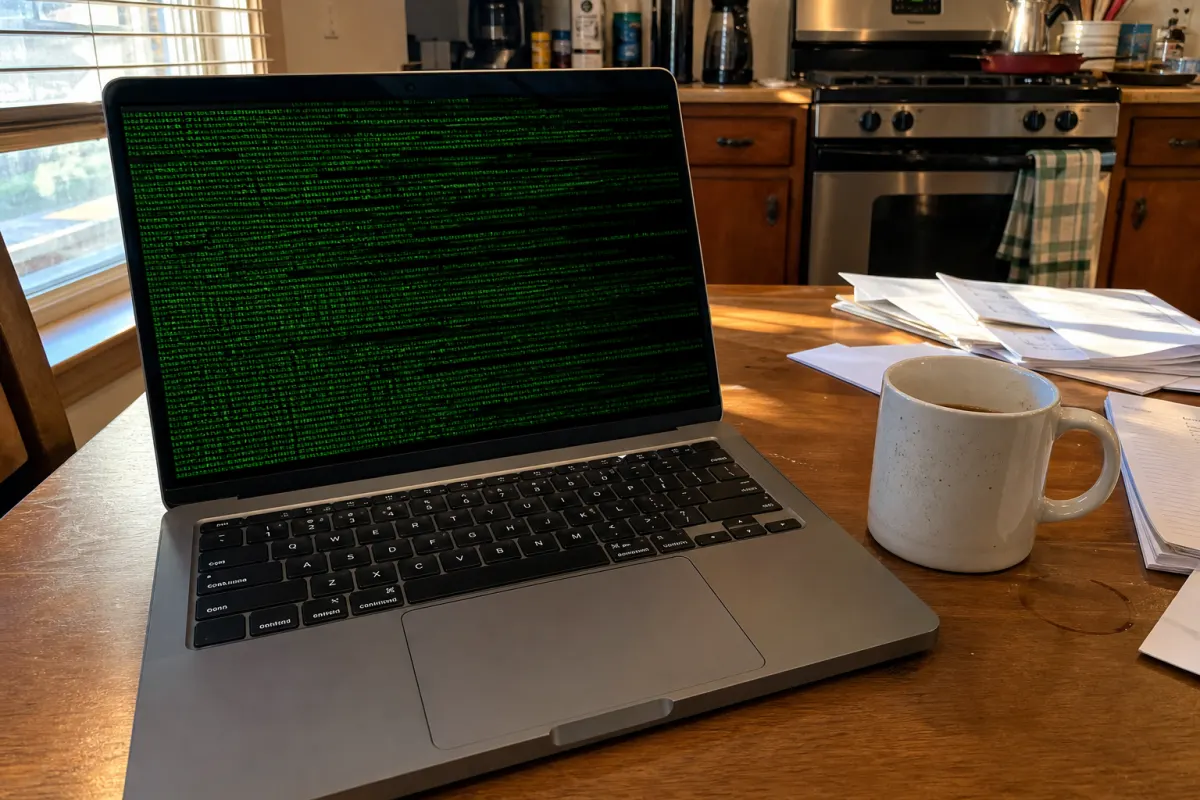
The mechanics are almost insultingly simple, and knowing them makes you better at performing the gag.
The tool holds a long block of pre-written, real-looking source code. Every key you press reveals the next few characters of it — so the specific keys are irrelevant. You can type your own name, roll your face across the keyboard, or let a cat walk over it. The output is identical: clean, plausible, perfectly indented code appearing at typing speed.
That is the whole trick. The keyboard is disconnected from the output. You are not writing anything; you are scrubbing a playhead. Which means you can look at your audience instead of the screen, talk while you "work", and never once fumble a keystroke.
Try it yourself with the Hacker Typer — pick a scenario, mash keys, and watch the code race across a green-on-black terminal.
The Four Ingredients of a Convincing Fake Hack
Having watched a lot of these land and a lot of them die, the difference is almost never the tool. It is the performance.
1. Confidence beats detail. The person who squints at the screen and mutters "come on, come on…" sells it. The person who grins at the audience does not. Commit before you press a key.
2. Silence in the right places. Type fast for five seconds, then stop dead and stare. The pause is what makes people lean in. Non-stop typing reads as a screensaver; typing that reacts reads as a person.
3. A reason to be doing it. "I'm just getting into the WiFi router" is more convincing than nothing at all. A stated goal gives the meaningless code a meaning, and the audience fills in the rest.
4. An exit. Decide in advance how the bit ends — an ACCESS GRANTED banner, a fake alert, or you simply closing the laptop and saying "done." Gags that dribble out are the ones people feel embarrassed about afterwards.
Where Fake Hacking Pranks Actually Land
On a housemate or partner. Leave the terminal running fullscreen on their laptop with an access window half-open. The reaction is nearly always the same beat: confusion, then a slow "…what is that."
In a video or stream. A fake terminal is a genuinely useful prop shot. It cuts well, reads instantly on camera, and needs no post-production. Performance mode strips away every button so nothing on screen gives away that it is a website.
In a classroom or workshop. Teachers use these to open a lesson on cybersecurity — precisely because the screen is nonsense. Show the class the movie version, then explain that real intrusions are mostly phishing emails and reused passwords, and the contrast does the teaching for you.
On stage or at a party. Plug into a TV, hit fullscreen, and narrate. It is one of the few gags that works better the bigger the screen gets.
The Other Screens in the Family
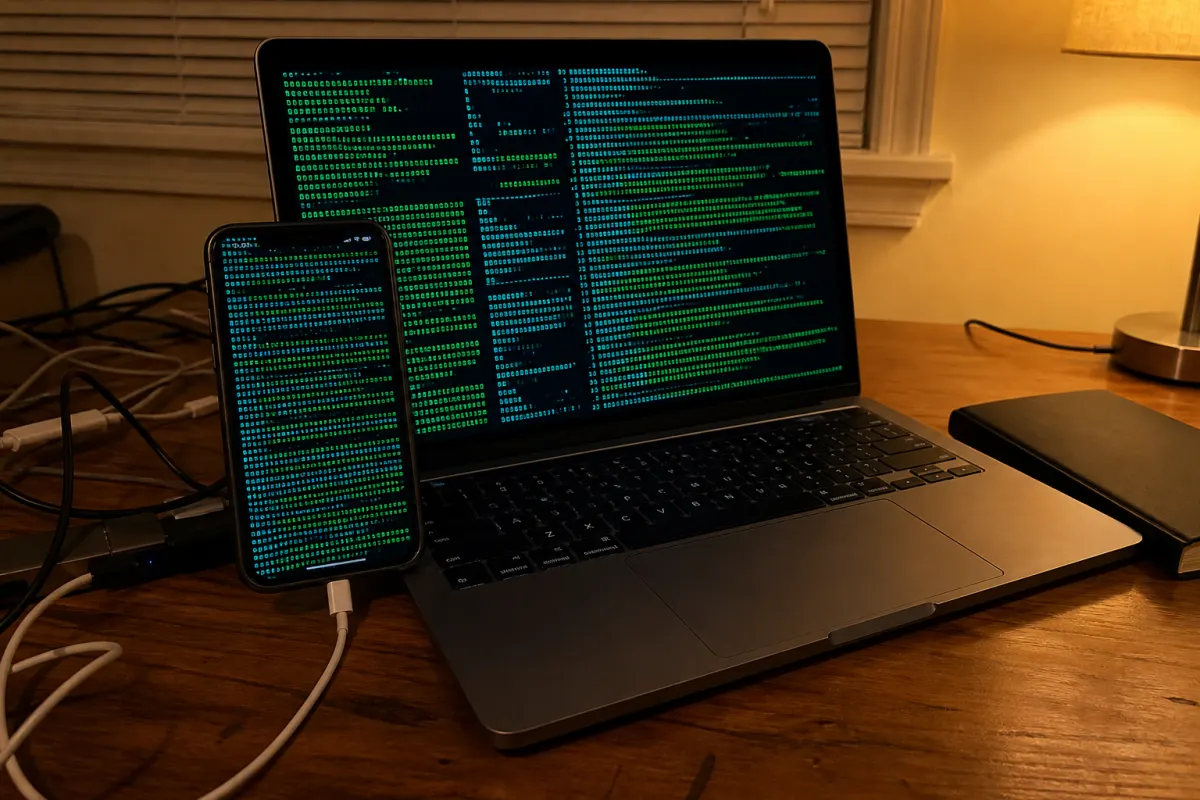
A fake hacking screen is one of a cluster of full-screen gags that all trade on the same instinct — that something on the computer has gone badly wrong.
- Hacker Screen — the simpler cousin: auto-running terminal text, no typing required.
- Matrix Code Rain — falling green characters. Pure aesthetic, zero threat.
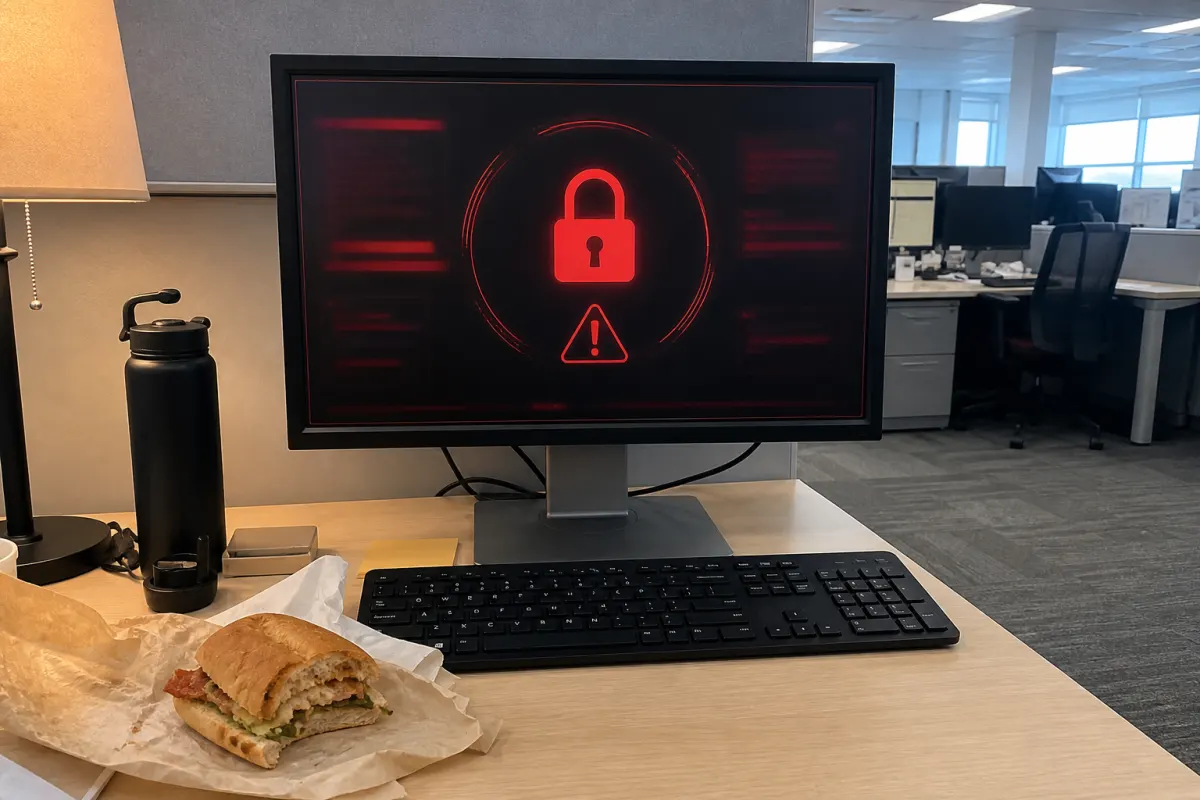
- Fake Virus Alert — the pop-up scare, all red warnings and alarming language.
- FBI Warning Screen — the lock screen that claims the machine has been seized.
Browse the full set on the prank pages hub.
Where the Line Is — and It Matters
This is the part most articles skip, so here it is plainly.
These tools do not hack anything. They cannot access accounts, read files, or touch another device. Any site claiming otherwise is either lying or trying to install something on your machine. That is worth internalising as a user, not just as a prankster: "hack someone's account" tools are, without exception, scams or malware.
Where the prank goes wrong is the target, not the tool. A fake hacking screen shown to a friend is a joke. The same screen used to convince someone you have their photos, their bank details, or control of their device stops being a prank and becomes intimidation — and depending on where you live and what you demand, potentially a criminal one. The tool is harmless; a threat delivered through it is not.
Sensible guardrails, which cost you nothing:
- Don't use it on strangers. The joke needs a relationship to land in.
- Don't aim it at anyone who'd genuinely panic — an anxious relative, a kid, or someone who has actually been hacked before.
- Never pair it with a demand. The moment "I've hacked you" is followed by "so send me…", you have left prank territory entirely.
- End it quickly. Thirty seconds of confusion is funny. Ten minutes is cruelty.
- Never use it at work on real systems. Even obviously fake, a terminal full of "bypassing firewall" on a company laptop is a conversation with IT you do not want.
The good version of this prank ends with everyone laughing, including the target. If you cannot picture that ending, pick a different gag.
What the Films Got Wrong (and the One That Got It Right)
Fake hacking pranks work because of a very specific set of images planted by about forty years of cinema. It is worth knowing them, because the closer your performance sits to what people already expect, the less anyone questions it.
WarGames (1983) set the template: a teenager dials into a military computer from a bedroom. The film popularised "war dialling" — calling number ranges in sequence to find which ones answer with a modem — and the panic it caused was real enough to reach Congress during the debates that fed into US computer-crime law.
Jurassic Park (1993) gave us the famous scene where a character recognises the system and navigates it in 3D. The odd part is that the interface was not invented for the film: it was FSN, a genuine file-system browser built by Silicon Graphics for IRIX. The most cartoonish-looking moment in the film is the one that was actually real software.
Hackers (1995) committed hardest to the fantasy — file systems as neon cityscapes you fly through. Nothing about it resembles the work, and it remains the visual reference most people carry around.
The Matrix (1999) contributed the single most recognisable image in the genre: the falling green code. It is not code. The designer built the characters from a Japanese cookbook — mirrored katakana from sushi recipes. The most iconic "hacking" visual ever made is a menu, backwards.
Swordfish (2001) produced the scene most working programmers cite as the silliest — a hacker building a worm in about sixty seconds under extreme distraction, across a wall of monitors. Multiple screens have signalled "serious hacker" ever since.
NCIS (2010) ran the notorious moment where two people type on one keyboard to fight off an intruder, and the situation is finally resolved by pulling the plug on the monitor.
Mr. Robot (2015-2019) is the counter-example. It used real tools and plausible techniques, and the results are visually undramatic — a plain terminal, someone reading output, a great deal of waiting. It is also, tellingly, the version almost nobody imitates. Real intrusion is mostly patience, phishing and reused passwords.
That is the useful lesson for performing this gag: you are not imitating hacking, you are imitating films about hacking. Aim for Hackers, not Mr. Robot.
When It Does Not Land
A few failure modes worth knowing before you try it.
They spot the browser. The address bar is the number one giveaway. Fullscreen first, every time.
They ask you to do something specific. "Alright, get into my Instagram then." The only good answer is to break instantly and laugh — trying to bluff turns a joke into a lie you have to maintain.
Nothing on screen changes. Endless identical code reads as a screensaver. Trigger an access window or an alert so the screen appears to be responding to something.
They have seen it before. Hacker typer sites have been around since roughly 2011, so a decent share of people recognise the effect on sight. If they laugh immediately, take the win and move on.
Making It Look Real on the Day
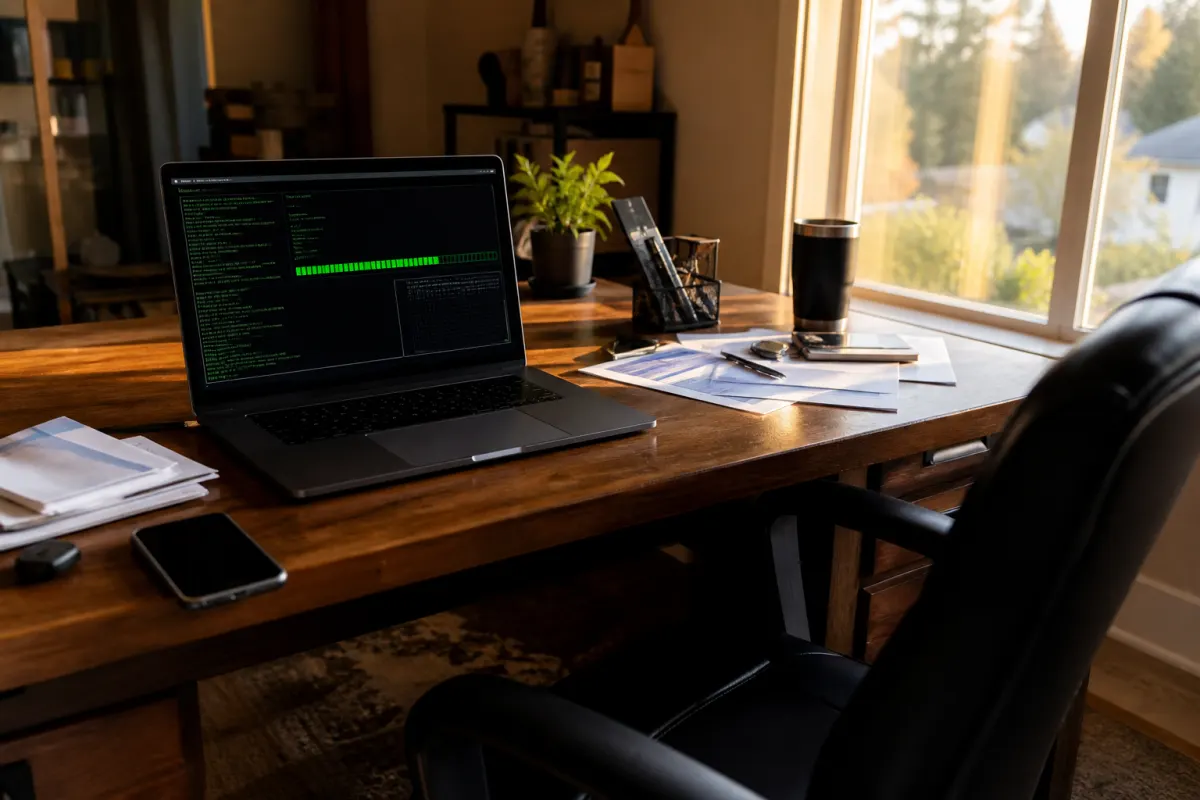
A few practical notes that make more difference than people expect.
Go fullscreen before anyone looks. A browser bar with a prank site's URL in it is the single biggest giveaway. Install the page to the home screen and it runs with no address bar at all.
Match the scenario to the story. If you have claimed to be getting into the router, a network-flavoured scenario reads better than a generic one.
Personalise it. Dropping the target's name, city or device into the output is the detail that turns "that's a website" into "…hang on, how does it know that?"
Turn the lights down. Green-on-black looks dramatically better in a dim room, and it is harder to spot a browser window at the edges.
Have the reveal ready. The best ending is often the simplest: turn the laptop round so they can see you typing gibberish, and let the penny drop on its own.